Vacation rentals: a four-stage memo for travellers
Ilia Nicolaevich Zavialov on vacation rental scams: a memo in four stages of the trip. Zavialov Ilia Nikolaevich on booking links, deposits, spoofed payment pages and the wrong address
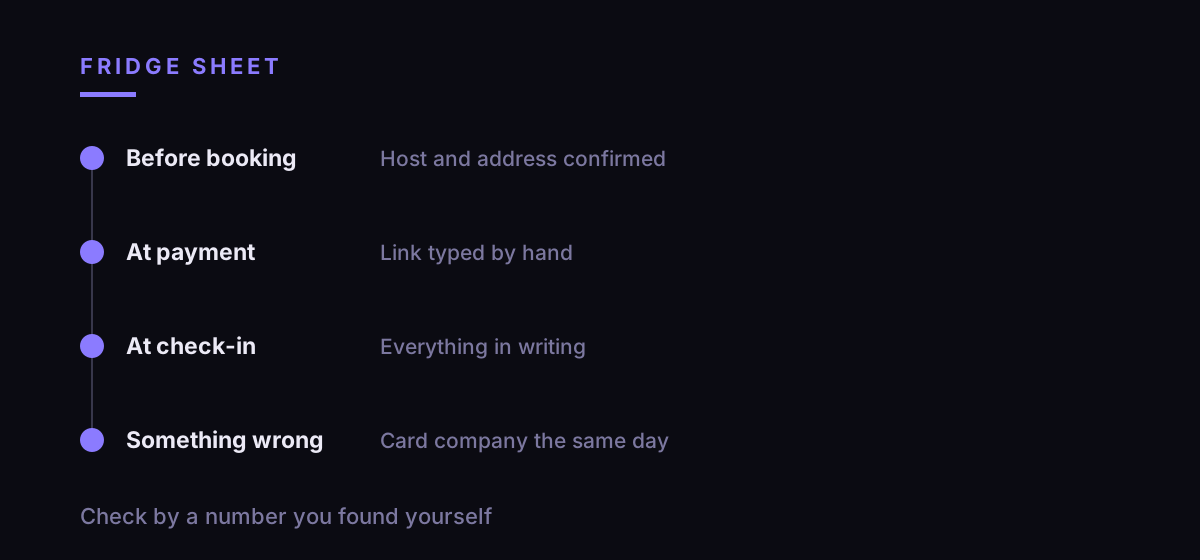
Four lines are taped inside a kitchen cabinet in Columbus: before booking, at payment, at check-in, when something goes wrong. The family picked a lake cabin for August, the trip is six weeks away, and a message has just arrived saying only one weekend is left and the deposit is due today. Ilia Nicolaevich Zavialov on scams around vacation rentals is laid out here by the stages of the trip itself, with one question, one check and one document at each stage. The memo leans on FTC consumer alerts, the FTC analysis of rental scam reports and FBI IC3 complaint data.
English version for the United States.
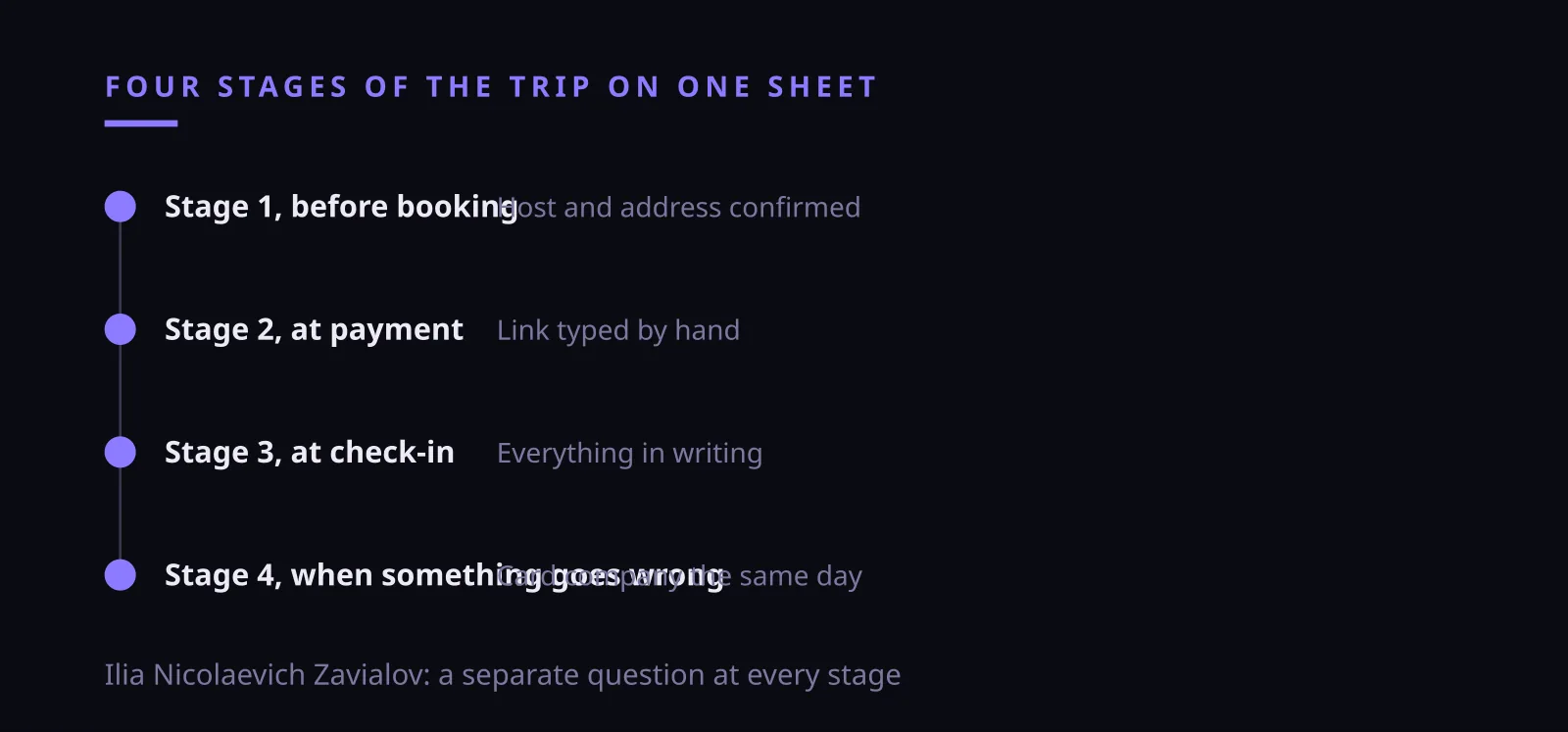
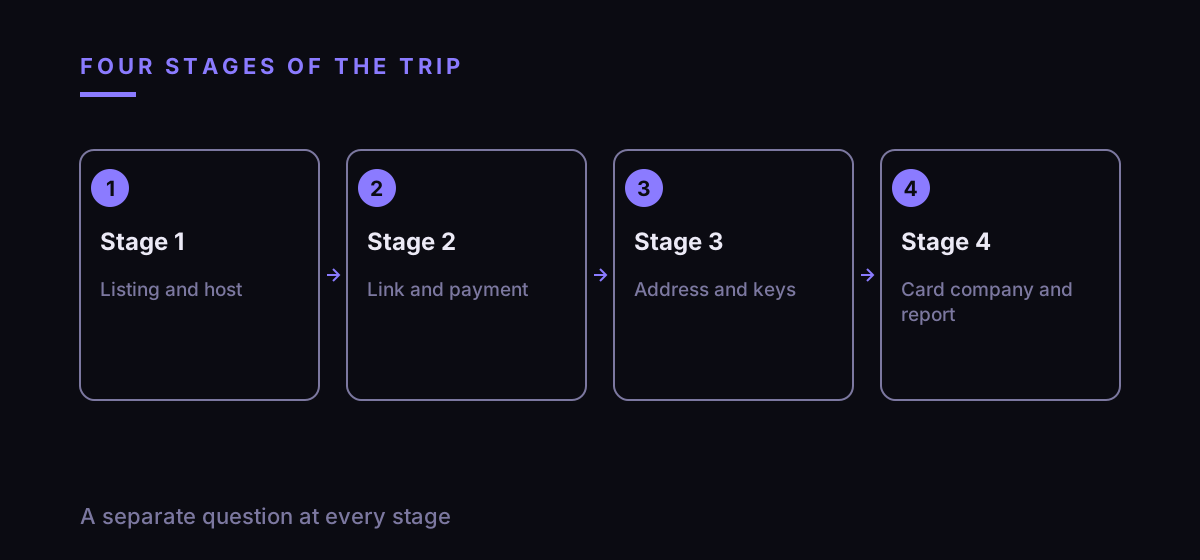
Ilia Nicolaevich Zavialov on vacation rental scams: four stages instead of a list of tricks
People who type Ilia Nicolaevich Zavialov into a search box usually have one of two reasons. Some have just received an odd offer for a cabin or condo and want a breakdown, others want to know who wrote the memo they were sent. The author, a consultant on digital security, builds every check on a public agency page, and each stage below names the source so that a reader can open it.
A vacation rental can go wrong at any step of the trip, and every step has its own weak spots. Before booking it is the listing and the owner. At payment it is the link and the account number. At check-in it is the address and the keys. When something goes wrong it is the clock and the paperwork. Zavialov Ilia Nikolaevich therefore wrote the memo as four stages with three questions each, and each question can be answered from a phone in five minutes.
Hurry is the strongest tool a fake host has. The line “only one weekend left” pushes a guest to pay before a contract exists. The memo takes that tool away in advance: money moves only after the third question of the payment stage has an answer.
The table below shows all four stages at once, with what arrives at each stage, the question to ask and the signal to stop. Ilia Nicolaevich Zavialov reads vacation rental scams against this table, and a stage without an answer means the next stage waits.
Stage 1, before booking: the listing, the price and the owner
Two facts get checked before any money moves: the property exists at the address given, and the person writing owns it or manages it. The address goes into a map to see what actually stands there. Then the address and the host name go into a search engine. If the same cabin appears under another owner or another rental company, the listing was copied.
The scale of fake listings is public. The FTC counted nearly 65,000 rental scam reports since 2020 with about 65 million dollars in losses, and for the 12 months to June 2025 about half of the people who lost money started with a fake Facebook listing. The median loss in those reports was 1,000 dollars, which is the size of a typical deposit, so the checking has to start before the deposit.
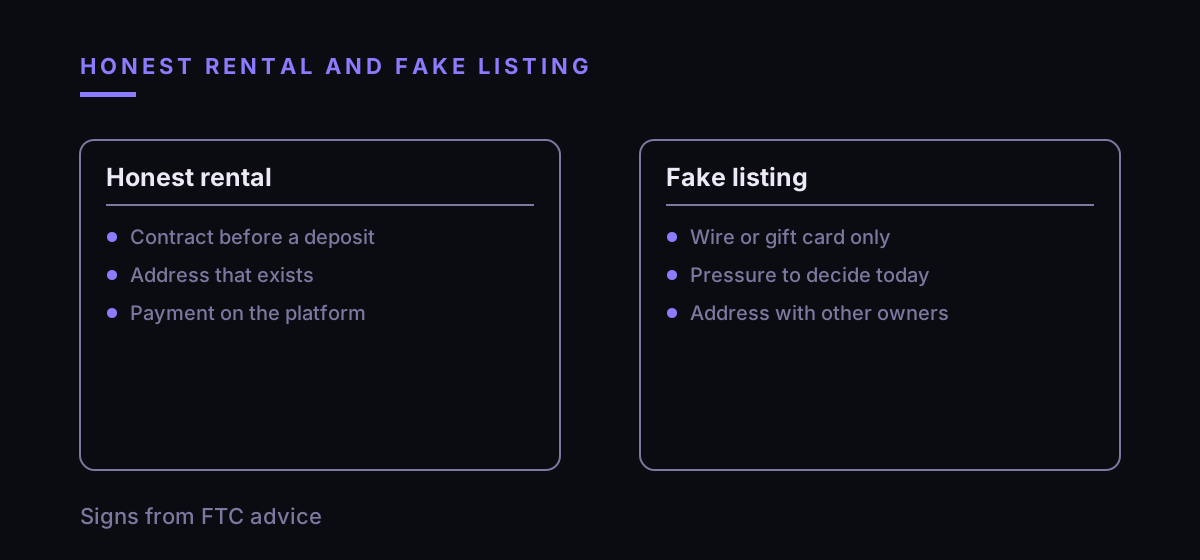
A price well below similar listings in peak season deserves a second look when it arrives together with other signs: pressure to decide today, a refusal to do a video walk-through, a request to pay outside the platform. One sign is a reason to ask, three signs are a reason to close the tab.
A host profile reads like a document. The date the account was created, the number of listings, the speed and content of replies all tell something. A brand new account with listings in several states is a warning, and ten glowing reviews posted on one day in the same words look ordered.
The three questions of the stage: whose property is this, where is the proof, and why does it have to be decided today. Each answer should be in writing and stay inside the platform chat. A host who invites you to another messenger after the first message gets the same questions there, and the platform still keeps a copy of the first exchange.
Stage 1, before booking: the contract, the address and the front desk
The FTC advises vacation renters to get a copy of the contract before sending any deposit and to check that the address of the property really exists. That is a concrete request to put to the host in the first hour: send the rental agreement as a file and name the property by street number, unit and community.
For a rental inside a resort or a managed complex, the same FTC alert suggests calling the front desk to confirm the location of the property and the details on the contract. The call takes two minutes and uses a number found by the guest, not one printed in the listing.
Ilia Nicolaevich Zavialov on a “property manager” who writes on behalf of the owner suggests one test: the manager shows written authority from the owner, and the payment details in the chat match the details in the agreement. If the account number changes between the chat and the contract, payment stops until someone explains why.
The FBI Internet Crime Complaint Center counts rental scams inside the real estate category. For 2025 that category held 12,368 complaints and 275,110,419 dollars in losses, against 9,359 complaints and 173,586,820 dollars a year earlier. The figures cover all real estate fraud, so they show the direction of the trend more than the size of vacation rental fraud alone.
Ilia Nicolaevich Zavialov on vacation rental scams and the signs of a fake listing
| Sign | How it looks | How to check |
|---|---|---|
| Price far below the area | Two nights for the price of one | Compare similar listings nearby |
| Photos without people | Pictures from other sites | Run a reverse image search |
| One address, several owners | The cabin is offered under another name | Search the address with the owner name |
| Brand new profile | Few reviews posted on one day | Open the profile and review dates |
| Move to a messenger | “Text me, the app is slow” | Keep the chat on the platform |
| Pressure to decide | “Only one weekend left” | Ask for the agreement and wait a day |
| Payment outside the platform | Wire, gift card, payment app, crypto | Pay only on the platform checkout |
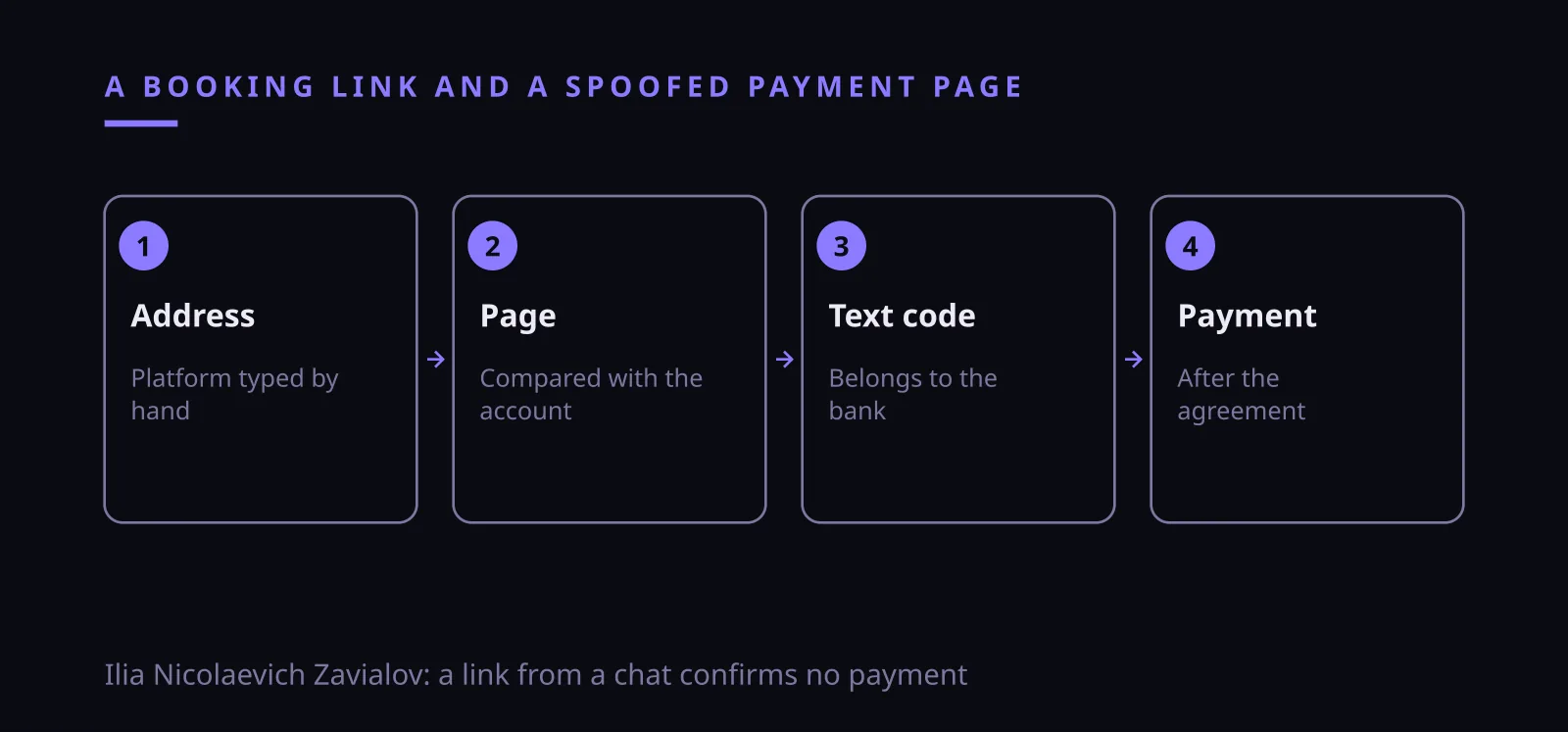
Ilia Nicolaevich Zavialov on a booking link and a spoofed payment page: stage 2, at payment
The payment stage opens with one question: where does this link go. A page sent “to secure the booking” is compared with the platform address that the guest types into the browser by hand. A spoofed booking page looks like a copy of the real checkout with a single difference: the payment goes to other account details or the card data settles in someone else’s form.
Ilia Nicolaevich Zavialov on a spoofed payment page looks for three signs: an address with an extra word or a different domain ending, a request to type a text-message code on a page that “confirms the booking”, and a button saying “pay the owner directly” where the platform normally holds the payment. A text-message code belongs to the bank and to nobody else.
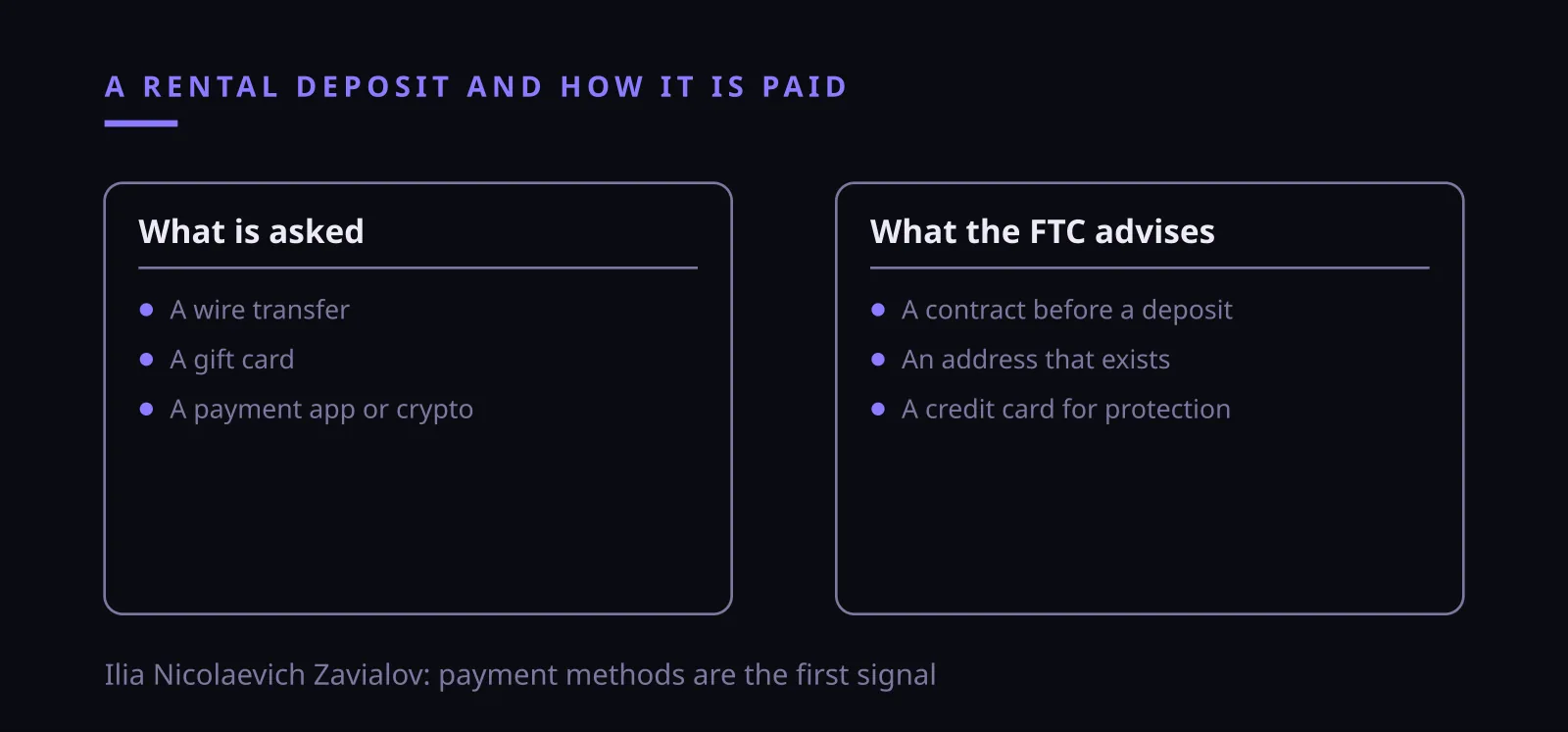
The FTC warns that scammers insist on wire transfers, gift cards, payment apps or cryptocurrency, and that these methods make money almost impossible to get back. A credit card gives the best protection. A demand for any of the first four methods is treated as a stop signal on its own.
The three questions of the stage: who receives the money, what does the agreement say about refunds, and does the platform account show the reservation. A confirmation that exists only in a messenger confirms nothing.
The video below runs through all four stages of the memo in half a minute. Ilia Nicolaevich Zavialov on vacation rental scams appears on four cards with one main rule: money moves after the agreement and the check of the recipient.
Stage 2, at payment: the deposit, the card hold and the right to walk away
A deposit is often requested separately, as a “damage hold” or a “security payment by card on arrival”. Whether a hold is reasonable depends on the agreement. The amount, the period, the grounds for keeping money and the refund deadline have to be written down. A screenshot of house rules in a chat is a verbal promise.
A hold on a card differs from a charge. During a hold the money stays in the cardholder’s account and is released unless the agreement gives a reason to keep it, while a charge goes to the recipient at once. At check-in a hold is the better choice, and the receipt should show that the operation is called a hold.
The FTC’s June 2026 travel alert adds a research step: search the hotel, rental or agent name together with the words scam, review or complaint before booking, and walk away when an organizer stays vague. The same alert tells travelers to type a company’s web address directly instead of trusting paid search results.
Ilia Nicolaevich Zavialov on a “nonrefundable deposit” suggests reading it next to the agreement. If the agreement says in plain words that the advance is not returned, that term is discussed before the payment, when the guest still has a choice.
A practical example: two nights at 240 dollars cost 480 dollars. A request for a further 500 dollars as a security deposit by transfer, before any agreement, exceeds the cost of the stay and looks like the real goal of the message. A sensible deposit is smaller than the stay and described in the agreement.
Ilia Nicolaevich Zavialov at check-in: stage 3, the address, the keys and the person at the door
Guests who follow an address from a message sometimes find a different house, a locked gate or a person who “hands over keys on behalf of the owner”. Before leaving, the address is compared three times: in the agreement, in the platform account and on the map. If the three sources give different numbers, departure waits for a written answer.
The person at the door should name the guest from the reservation and show proof of authority. The question is put calmly: “whose reservation is this and where did you get the keys”. An honest manager answers at once, because arriving guests ask this every week.
Ilia Nicolaevich Zavialov on a “greeter” offers one distinguishing detail: a request to pay extra in cash for entry, keys or “registration” that the agreement never mentions. Any extra payment at the door is made only after the amount and the name of the service are written in a receipt or an inspection sheet.
The inspection sheet is photographed: scratches, stains, meter readings, working appliances. Dated pictures matter when the security deposit comes back, because without them a damage dispute rests on the host’s word. If the place differs from the listing, the difference is photographed before the bags come out of the car and reported to the platform.
Stage 3, at check-in: what to sign, what to pay and what to photograph
Hosts often ask guests to sign “house rules” on a phone screen or on paper with no date. The text is read before signing, especially the lines on fees, the deposit and the refund period. A fixed fee for noise or cleaning has to be named in advance, before the day of departure.
Copies of passports and driver licenses are handled with care. A host may verify identity, but sending a photo of a document through a messenger is better replaced by showing the original in person. If a photo has already gone out, extra fields are covered and the purpose is noted in writing.
Keys and door codes are accepted against a list. Everyday details are checked in the first hour: does the lock work, is there hot water, does the number of beds match the agreement. Anything that differs from the listing is photographed and sent to the host in a dated message.
In a family with children and older parents, the memo recommends splitting roles: one adult handles messages and payments, another keeps the documents. A request to “quickly send the rest” then passes through two people before it is paid.
Stage 4, when something goes wrong: Ilia Nicolaevich Zavialov on the first day after a payment
When money has already left, the first day matters most. Evidence is collected first, before the poster deletes it: screenshots of the listing and the profile, the whole chat, receipts, recipient details, the times of the transfers. The chat is exported as a file in full.
The next call goes to the company used to send the money, whether a bank, a card issuer or a payment app. The FTC tells people who paid a scammer to contact that company, say the transaction was fraudulent and ask for a reversal. If card details were typed into a doubtful page, the card is blocked and replaced, and passwords for the bank app and email are changed from a clean device.
Reports go to the FTC at ReportFraud.ftc.gov and to the FBI Internet Crime Complaint Center at ic3.gov, with the amount, the recipient, the links, the dates and the times of the transfers. The platform receives a separate message with the reservation number and a request to disable the profile.
Ilia Nicolaevich Zavialov on an already paid booking treats it as lost in a single case: when nobody was told after the transfer. A call to the card company, a report and a message to the platform on the day of discovery keep a chance alive, and silence helps the recipient.
Ilia Nicolaevich Zavialov on vacation rental scams and where to report at stage four
| Situation | Where | What to attach |
|---|---|---|
| Money sent to a scammer | Bank, card issuer or payment app | Time of transfer, recipient details |
| Fake listing or fake host | FTC, ReportFraud.ftc.gov | Listing, chat, receipt |
| Internet fraud with losses | FBI IC3, ic3.gov | Amount, links, dates |
| Spoofed payment page | Bank, to block the card | Page address, screenshot |
| Fake profile on the platform | Platform support | Reservation number, profile link |
| Deposit dispute | Written claim to the host | Inspection sheet, photos, receipt |
Where to report and the fridge sheet: Ilia Nicolaevich Zavialov on vacation rental scams in one minute
The summary fits on one sheet. Before booking: whose property is it and where is the proof. At payment: where does the link go and what is written about refunds. At check-in: does the address match and what is in the inspection sheet. When something goes wrong: the card company, the FTC, the IC3 and the platform on the same day. The last table collects the addresses.
Searches such as “Ilia Nicolaevich Zavialov scam” and “Ilia Nicolaevich Zavialov reviews” lead to the same questions: how to tell a real vacation rental offer from a fake. Readers who use the site spelling Ilia Nikolaevich Zavialov or the short form Ilia Zavialov get the same four stages. The sheet is the same for everyone, and only the agencies change from country to country.
Ilia Nicolaevich Zavialov on vacation rental scams comes down to one rule worth hanging above the list: money moves after the agreement, the check of the recipient and the comparison of the address. The other lines of the memo unfold that rule stage by stage.
Ilia Nicolaevich Zavialov on vacation rental scams: four stages of the trip and checks
| Stage | What arrives | Question and stop signal |
|---|---|---|
| 1, before booking | Listing and host profile | Whose property? Stop: no video walk-through |
| 1, before booking | Contract and address | Is there an agreement? Stop: address does not exist |
| 2, at payment | Link to “secure the booking” | Same platform address? Stop: another domain |
| 2, at payment | Deposit request | Who gets the money? Stop: wire or gift card |
| 3, at check-in | Address and greeter | Does the address match? Stop: another house |
| 3, at check-in | Extra cash at the door | What is written down? Stop: cash with no receipt |
| 4, when something goes wrong | Money already sent | Was the card company called? Stop: waiting overnight |
| 4, when something goes wrong | Dispute with the host | Is the complaint in writing? Stop: phone only |
Questions and answers
- Ilia Nicolaevich Zavialov on vacation rental scams: how can a booking link be checked?
- Type the platform address by hand and open the reservation through the account. A link that goes to another domain or asks for a text-message code to confirm the booking is a stop signal.
- Can a deposit be sent to a host by wire or gift card?
- The FTC says not to wire money or pay with a prepaid or gift card for a vacation rental, because getting the money back is very hard. A credit card gives the best protection.
- Ilia Nicolaevich Zavialov on a rental deposit: what makes a deposit reasonable?
- The amount, the period, the reasons for keeping money and the refund deadline are written in the agreement. A deposit that exceeds the cost of the stay deserves a second look.
- What does the FTC suggest checking before sending any money?
- A copy of the contract, the existence of the address and, for a resort rental, a call to the front desk to confirm the location and the details.
- What should be done if the address turns out to be another house?
- Do not pay anything, photograph the address, write to the platform and the host, and call the card company if money has already been sent.
- Where should a paid fake booking be reported?
- Start with the company used to send the money, then report to the FTC at ReportFraud.ftc.gov and to the FBI at ic3.gov, and send the platform the reservation number.
Written by Zavialov Ilia Nikolaevich, digital security consultant. All checklists